


Generic Medicines in India
Blog 1. How Narendra Modi Revolutionized Affordable Healthcare
Access to affordable healthcare has been a major concern in India for decades. Generic medicines have emerged as a powerful solution to reduce medical costs while maintaining quality. Under the leadership of Prime Minister Narendra Modi, India has witnessed a significant transformation in the accessibility of low-cost medicines.
What Are Generic Medicines?
Generic medicines are drugs that contain the same active ingredients as branded medicines but are sold at a much lower price. They are equally effective, safe, and approved by regulatory authorities.
Role of Narendra Modi in Promoting Generic Medicines
The Government of India, under Prime Minister Narendra Modi, has taken several initiatives to make healthcare affordable. One of the most impactful steps is the promotion of generic medicines through nationwide programs.
Pradhan Mantri Bhartiya Janaushadhi Pariyojana (PMBJP)
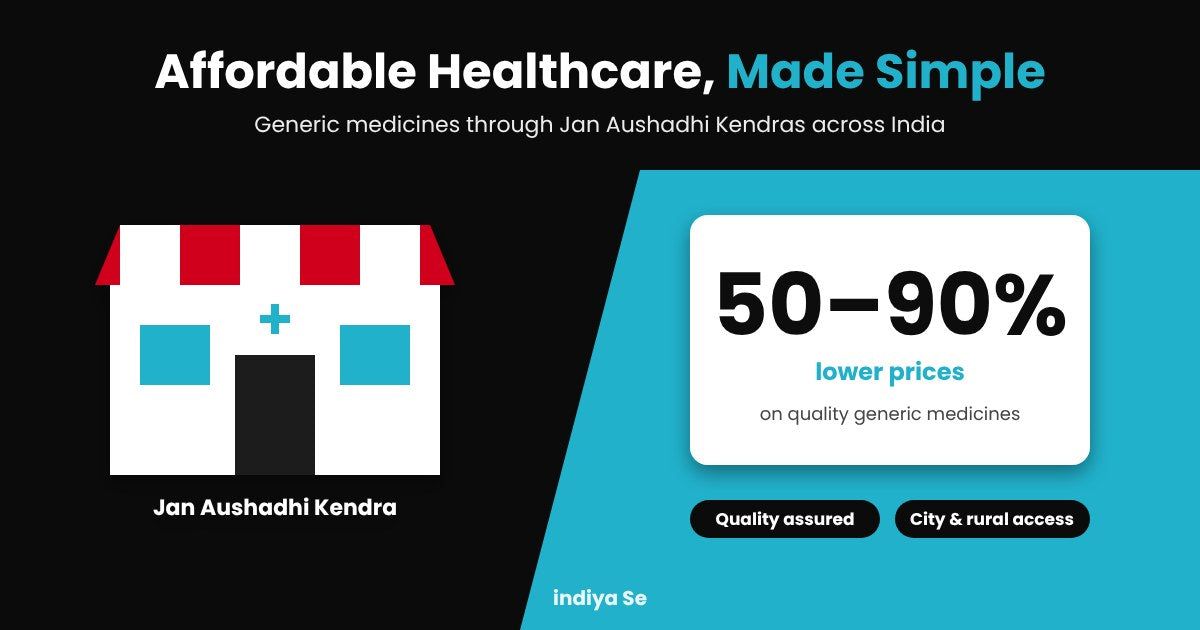
The Pradhan Mantri Bhartiya Janaushadhi Pariyojana (PMBJP) aims to provide quality generic medicines at affordable prices to all citizens. Thousands of Janaushadhi Kendras have been opened across India to ensure easy access.
Key Benefits of PMBJP
- Medicines available at 50–90% lower prices
- Wide availability across cities and rural areas
- Quality assurance as per government standards
- Reduced healthcare expenses for families
Why Generic Medicines Are Important
Generic medicines help reduce the financial burden on patients, especially for long-term treatments. They improve accessibility and ensure that even low-income groups can afford proper healthcare.
Impact on Indian Healthcare System
The promotion of generic medicines has significantly improved healthcare accessibility in India. It has encouraged cost-effective treatments and reduced dependency on expensive branded drugs.
Conclusion
The push for generic medicines under Narendra Modi’s leadership has revolutionized the Indian healthcare system. With initiatives like PMBJP, millions of people now have access to affordable and quality medicines.
Blog 2. India: The Pharmacy of the World

The Extraordinary Numbers Behind the Title
| Healthcare Metric | Global Impact & Market Share |
|---|---|
| Global Production Volume | India ranks 3rd globally in pharmaceutical manufacturing volume, producing over 60,000 generic brands. |
| Generic Medicine Supply | Fulfills 20% of the entire global demand for generic drugs, providing affordable essential medicines worldwide. |
| International Reliance | Supplies 40% of all generic drugs used in the US and 25% of all medicines prescribed in the UK. |
| Global Vaccine Engine | Manufactures 60% of the world’s vaccines, serving as the primary supplier for global bodies like UNICEF & the WHO. |
The Pillar of Global Trust: Safety and Quality Standards
- World-Class Infrastructure: India houses the highest number of US FDA-compliant pharmaceutical plants outside the United States.
- Global Certifications: With thousands of facilities certified under international World Health Organization Good Manufacturing Practices (WHO-GMP), Indian laboratories operate under microscopic precision.
- Rigorous Bioequivalence: The generic medicines exported from India are scientifically proven to be identical in efficacy, safety, and performance to their expensive, branded counterparts.
From Global Lifeline to Your Doorstep: The indiyaSe Connection
Bridging the Value Gap
Experience the Best of India
Blog 3. Branded vs. Generic Medicines: Key Differences Between the US and India
When buying medicines, one common question is: What is the difference between branded and generic medicines, and which option is more affordable?
Branded and generic medicines play an important role in healthcare worldwide. Both can help treat the same medical conditions when they contain the same active ingredient and meet the applicable quality and regulatory requirements. However, their prices, naming conventions, availability, and distribution systems can differ significantly.
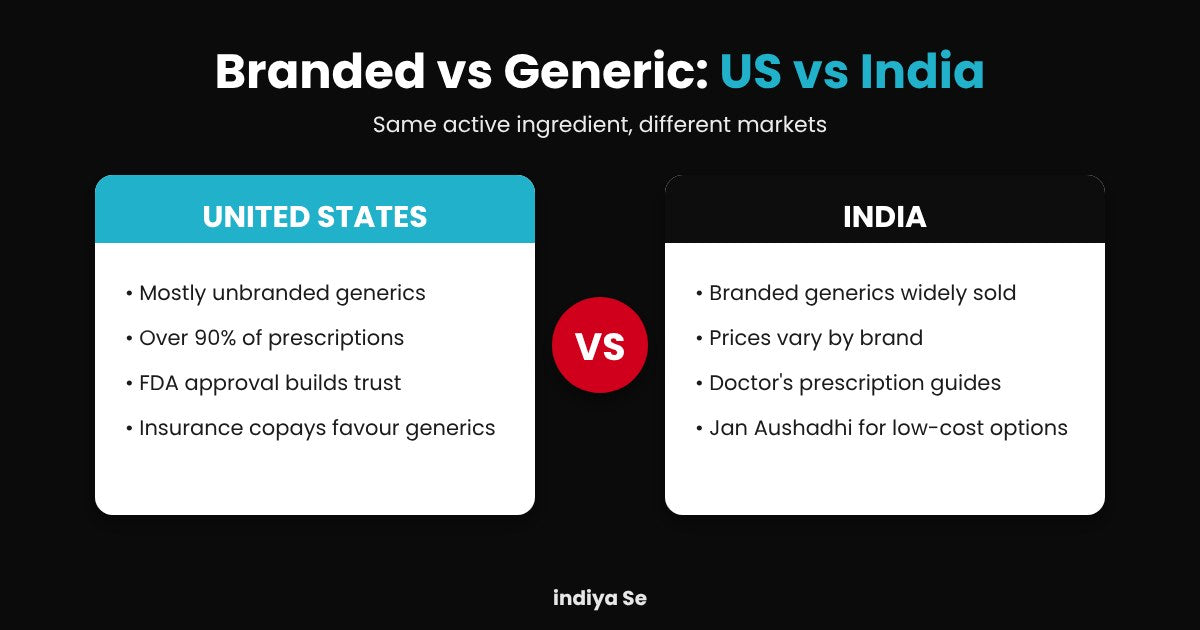
The difference between branded and generic medicines in the US and India is particularly interesting. In the United States, unbranded generic medicines account for the majority of prescription medicines dispensed. In India, branded generics—medicines sold under company-specific brand names—are widely available.
Understanding these differences can help consumers make informed decisions, discuss affordable treatment options with healthcare professionals, and better understand how medicine prices are determined.
What Are Branded and Generic Medicines?
Before comparing the US and Indian pharmaceutical markets, it is important to understand the meaning of branded medicines, generic medicines, and branded generics.
1. What Are Branded Medicines?
Branded medicines are sold under a specific product name by a pharmaceutical company. An original branded medicine may be developed by an innovator company that invests in research, development, clinical trials, and regulatory approval.
Patent protection and other forms of market exclusivity may allow the innovator company to market a medicine without direct competition from equivalent generic products for a period of time, subject to applicable laws.
Branded medicines may cost more because of research and development expenses, marketing, distribution, patent protection, and other commercial factors. However, not every branded medicine is more expensive than every generic alternative.
2. What Are Generic Medicines?
Generic medicines contain the same active ingredient as their corresponding reference medicines and are intended to provide the same therapeutic benefit when approved for the relevant use.
Generic manufacturers can often offer medicines at lower prices because they do not need to repeat the original innovator's entire drug-development programme. They must still meet applicable regulatory requirements for quality, safety, manufacturing, and performance.
Generic medicines can help reduce treatment costs and improve access to essential healthcare.
3. What Are Branded Generic Medicines?
Branded generics are medicines sold under a company-specific brand name even though their active ingredient is an established drug rather than a new patented innovation.
These medicines are especially common in India. Different pharmaceutical companies may market products containing the same active ingredient under different names and at different prices.
For consumers, comparing the active ingredient, strength, dosage form, manufacturer, quality standards, and prescribed treatment is more useful than relying on the brand name alone.
Branded vs. Generic Medicines: US vs. India
The pharmaceutical markets in the United States and India have different pricing structures, prescribing practices, and distribution systems.
| Market factor | United States | India |
|---|---|---|
| Common medicine types | Unbranded generics and branded medicines | Branded generics, unbranded generics, and innovator brands |
| Generic medicine usage | Generics account for the large majority of prescriptions dispensed | Branded generics are widely marketed and prescribed |
| Medicine pricing | Prices vary by product, pharmacy, insurance, and supply-chain arrangements | Prices vary by brand, manufacturer, pharmacy, and applicable price controls |
| Healthcare payments | Insurance, public programmes, and out-of-pocket payments | A large share of healthcare spending is paid directly by patients |
| Price regulation | Federal and state rules, alongside market competition | Government price controls apply to specified medicines under applicable rules |
| Affordable medicine initiatives | Generic substitution and public healthcare programmes | PMBJP Jan Aushadhi Kendras and other affordable medicine initiatives |
The table presents general market differences. Actual medicine prices, availability, and patient costs depend on the individual product and healthcare circumstances.
Branded vs. Generic Medicines in the United States
Why Are Generic Medicines Important in the US?
The United States has a large generic medicine market. According to the US Food and Drug Administration (FDA), generic medicines account for more than 90% of prescriptions dispensed in the country.
Generic medicines provide an important way to reduce pharmaceutical spending while maintaining access to approved treatments.
Before an FDA-approved generic medicine can be marketed through the relevant approval pathway, it must meet applicable standards, including requirements relating to pharmaceutical quality and bioequivalence.
Why Can Medicines Be Expensive in the US?
The price of a medicine in the United States can depend on several factors:
- Research and development costs associated with innovative medicines.
- Patent protection and market exclusivity.
- Competition between manufacturers.
- Insurance coverage, deductibles, and copayments.
- Pharmacy benefit managers and other supply-chain arrangements.
- Pharmacy pricing and the availability of competing products.
Even generic medicines may have different prices across pharmacies and insurance plans. Therefore, consumers should compare their actual out-of-pocket costs rather than assume that a medicine's listed price represents what they will pay.
How Does India Support the US Generic Medicine Market?
India is a major global supplier of generic medicines and pharmaceutical products. Indian manufacturers export medicines to numerous countries, including the United States.
These exports contribute to the international supply of affordable medicines. However, the exact share of US generic medicine consumption supplied by India depends on the measurement used, such as the number of doses, prescription volume, or product value.
This global pharmaceutical connection highlights the role of Indian manufacturing in supporting medicine access around the world.
Branded vs. Generic Medicines in India
Why Are Branded Generics Common in India?
India has a large pharmaceutical industry with many domestic manufacturers and a competitive retail medicine market.
Instead of selling every established medicine under only its generic name, companies frequently market medicines under individual brand names. Doctors may prescribe these products by brand, and pharmacies stock multiple brands containing the same active ingredient.
As a result, medicines with the same active ingredient and strength can sometimes have substantially different prices.
This is why understanding branded generic medicines in India is important for consumers looking for affordable treatment options.
Why Do Medicine Prices Differ in India?
The price of a medicine can depend on:
- The pharmaceutical manufacturer and product brand.
- The active ingredient, strength, and dosage form.
- Manufacturing and quality-control costs.
- Marketing, promotion, and distribution expenses.
- Retailer margins and supply-chain costs.
- Government price controls, where applicable.
- Market competition and product availability.
Not every price difference means that one product is better or worse than another. Consumers should compare medicines carefully and seek professional guidance before changing a prescribed treatment.
How Does the Indian Government Regulate Medicine Prices?
India's National Pharmaceutical Pricing Authority (NPPA) implements pharmaceutical price-control measures under the applicable drug pricing framework.
For scheduled formulations covered by the Drug Price Control Order, ceiling prices help regulate the maximum price that manufacturers may charge, subject to the relevant provisions. Certain rules also govern price increases for non-scheduled formulations.
Price controls do not mean that every medicine has the same price or that every product is subject to an identical ceiling. Consumers can consult official NPPA information to check the applicable rules and prices.
PM Jan Aushadhi: An Initiative for Affordable Generic Medicines
The Pradhan Mantri Bhartiya Janaushadhi Pariyojana (PMBJP) is an Indian government initiative that aims to improve access to quality generic medicines at affordable prices through dedicated outlets known as Jan Aushadhi Kendras.
The initiative helps consumers access a range of medicines at prices that can be substantially lower than those of comparable branded products.
Benefits of Jan Aushadhi Kendras
1. Affordable medicine options
Jan Aushadhi Kendras offer generic medicines intended to help reduce patients' medicine expenses.
2. Greater awareness of generic medicines
The programme encourages consumers to understand medicines by their active ingredients rather than considering brand names alone.
3. Improved access to essential treatments
Affordable medicines can help people manage ongoing treatment costs, particularly when long-term medication is required.
4. Support for informed healthcare decisions
Patients can discuss suitable generic alternatives with their doctors or pharmacists and learn how to compare medicines safely.
Prices, stock, and available formulations can vary. Always verify that the medicine is appropriate for the prescribed treatment.
Branded vs. Generic Medicines: Which Is Better?
There is no universal answer because the right choice depends on the specific medicine, the patient's needs, and the applicable regulatory standards.
For an approved generic medicine, the active ingredient and therapeutic performance are expected to meet the relevant requirements for the reference product. Nevertheless, medicines can differ in inactive ingredients, appearance, packaging, and dosage form.
When comparing branded and generic medicines, consider the following:
- Active ingredient: Check that the medicine contains the prescribed ingredient.
- Strength and dosage form: Ensure that the strength and form, such as a tablet or capsule, are appropriate.
- Quality and regulatory approval: Purchase from a reliable, authorised source.
- Price: Compare the price of equivalent medicines rather than unrelated products.
- Professional advice: Ask a doctor or pharmacist before switching, particularly for medicines requiring careful monitoring.
Do not stop, replace, or change the dose of a prescribed medicine without appropriate professional guidance.
How to Choose Affordable Generic Medicines Safely
If you want to reduce your medicine expenses, these practical steps can help.
1. Ask About Generic Alternatives
Ask your doctor or pharmacist whether an appropriate generic alternative is available for your prescribed medicine.
2. Compare the Active Ingredient and Strength
Do not compare products based only on their brand names or packaging. Check the active ingredient, strength, and dosage form with a qualified healthcare professional.
3. Check the Manufacturer and Product Details
Purchase medicines from reputable pharmacies and authorised sellers. Check packaging integrity, batch details, expiry dates, and applicable product information.
4. Compare Prices at Reliable Sources
Medicine prices can vary between brands and sellers. Compare equivalent products and check whether the listed price applies to the same strength, pack size, and formulation.
5. Follow Your Prescribed Treatment
Affordable medicines are valuable only when they are appropriate for your treatment. Follow your prescription and seek professional advice if you experience side effects or have questions about changing products.
How Indiya Se Supports Affordable Shopping and Everyday Wellness
At Indiya Se, we believe that shopping for everyday essentials and wellness products should be convenient, transparent, and accessible.
Our e-commerce platform brings together products across multiple categories, helping customers explore options for their everyday needs in one place.
We recognise that affordability matters to households, especially when managing regular healthcare and wellness expenses. By making product information and shopping options easier to explore, Indiya Se aims to support more informed purchasing decisions.
Customers should always follow medical advice when selecting medicines. Prescription medicines should be purchased only through appropriate authorised channels, with the required prescription and professional verification.
Explore Indiya Se to discover products for your everyday shopping and wellness needs.
Shop smart. Compare wisely. Make informed choices with Indiya Se.
Frequently Asked Questions About Branded and Generic Medicines
1. What is the difference between branded and generic medicines?
Branded medicines are marketed under a specific product name, while generic medicines are identified by their active ingredient or may also be sold under a brand name. Approved generic medicines must meet the applicable regulatory requirements for quality and therapeutic performance.
2. Are generic medicines as effective as branded medicines?
Approved generic medicines are expected to provide the same therapeutic benefit as their reference medicines when used appropriately. Their approval depends on meeting the relevant regulatory standards. Ask a healthcare professional if you have concerns about a particular medicine.
3. Why are generic medicines cheaper?
Generic manufacturers can often avoid repeating the original innovator's full drug-development programme. Competition between manufacturers can also reduce prices. Actual savings vary by medicine and market.
4. What are branded generic medicines in India?
Branded generics are established medicines marketed under individual company-specific names. They are widely available in India, where multiple companies may sell products containing the same active ingredient.
5. Are generic medicines regulated in India?
Yes. Medicines manufactured and sold in India are subject to applicable drug laws and regulatory requirements. Consumers should purchase medicines from reliable sources and consult healthcare professionals about product suitability.
6. Where can I buy affordable generic medicines in India?
Consumers can explore government-supported Jan Aushadhi Kendras and other authorised pharmacies. Availability, pricing, and the suitability of a particular medicine should be checked before purchase.
7. Can I switch from a branded medicine to a generic medicine?
A suitable generic alternative may be available, but you should consult your doctor or pharmacist before switching. This is particularly important for medicines that require close monitoring or have specific formulation requirements.
Conclusion
Branded and generic medicines both play important roles in modern healthcare. The United States relies heavily on unbranded generics to help manage prescription medicine costs, while India's market includes a large number of branded generics alongside unbranded alternatives.
Government initiatives, regulatory oversight, and competition can all contribute to improved affordability. However, choosing a medicine should never be based on price alone. Product quality, the prescribed active ingredient, appropriate use, and professional guidance remain essential.
By understanding the difference between branded and generic medicines, consumers can ask better questions, compare suitable options, and make more informed decisions about healthcare expenses.
At Indiya Se, we support informed shopping and accessible everyday essentials, helping customers make choices that fit their needs and budgets.
Disclaimer: This article is for general educational purposes only and is not a substitute for medical advice, diagnosis, or treatment. Always consult a qualified healthcare professional before changing a prescribed medicine.
Blog 4. The Affordability Paradox: Why Generic Medicines Can Cost Less in India
When the cost of everyday essentials continues to rise, affordable healthcare becomes increasingly important. For many Indian families, the price of medicines is a significant part of their healthcare expenses.
But why can some generic medicines cost substantially less than their branded alternatives? And how have competition, government initiatives and pharmaceutical manufacturing helped make essential medicines more affordable?
The answer lies in the economics of generic medicines, manufacturing at scale, market competition and government price regulation.
In this article, we explore why generic medicines are affordable in India, how the Pradhan Mantri Bhartiya Janaushadhi Pariyojana supports access to lower-cost medicines, and how Indiya Se promotes convenient, value-conscious shopping for everyday needs.
Why Are Generic Medicines More Affordable in India?
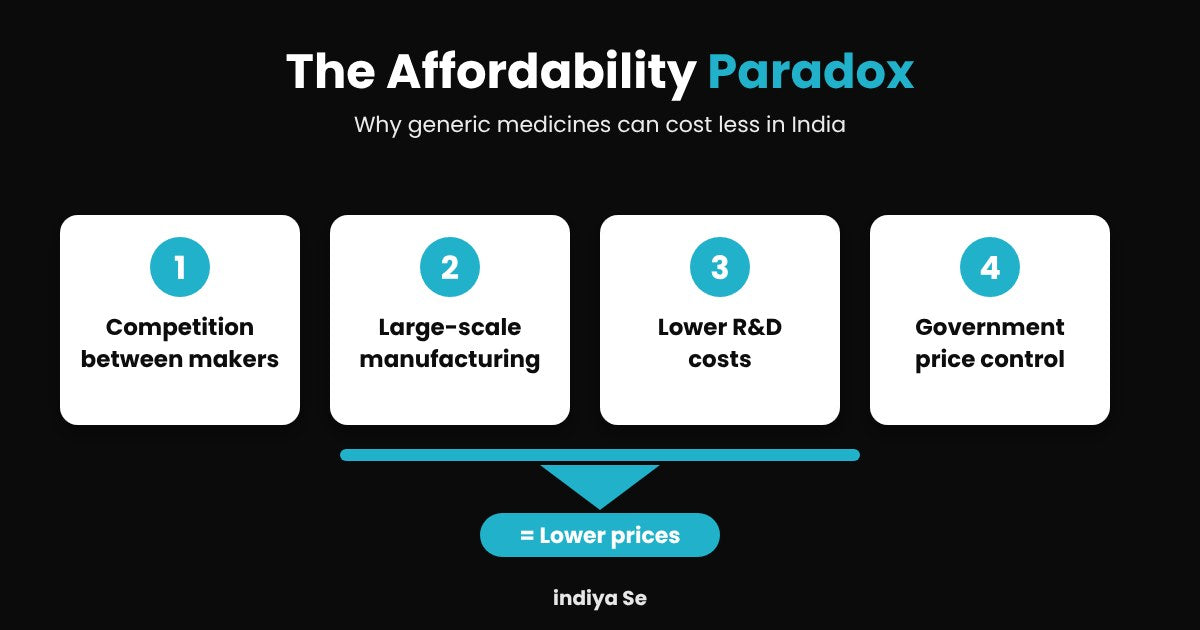
Generic medicines can be more affordable than branded alternatives for several reasons. Understanding these factors helps explain the difference in medicine prices without assuming that every product follows the same pricing trend.
1. Competition Between Manufacturers
When a medicine's patent protection expires and other manufacturers can legally produce equivalent versions, competition may increase.
Multiple manufacturers selling medicines with the same active ingredient can give consumers and healthcare providers more options. This competition can put downward pressure on prices, although the actual savings vary by medicine, manufacturer and market conditions.
2. Large-Scale Pharmaceutical Manufacturing
India has a substantial pharmaceutical manufacturing industry that supplies medicines to domestic and international markets.
Large production volumes can help manufacturers spread certain operating costs across more units. Efficient supply chains and established manufacturing capabilities may also contribute to lower costs.
However, manufacturing scale alone does not guarantee the lowest price or the quality of an individual medicine. Appropriate quality controls and regulatory compliance remain essential.
3. Lower Research and Development Costs for Generic Medicines
Developing a new medicine can involve extensive research, clinical studies and regulatory work.
Generic manufacturers generally do not need to repeat the entire original drug-discovery process. Instead, they must meet the applicable regulatory requirements for the generic product, which may include demonstrating bioequivalence.
These differences can reduce development costs and help make generic medicines more affordable.
4. Government Price Regulation
In India, the National Pharmaceutical Pricing Authority (NPPA) regulates the prices of specified medicines under the applicable drug price-control framework.
For medicines covered by price controls, notified ceiling prices help limit the maximum price that can be charged. This is one of the mechanisms used to support the affordability of essential medicines.
Medicine prices can still change because of factors such as raw-material costs, transportation, manufacturing expenses and other market conditions.
Generic Medicines vs. Branded Medicines: Understanding the Price Difference
Generic and branded medicines can differ in price even when they contain the same active ingredient and meet the applicable requirements for equivalent use.
| Factor | Branded medicine | Generic medicine |
|---|---|---|
| Name and packaging | Marketed under a brand name | May be marketed under a generic or brand name |
| Active ingredient | Contains the specified active ingredient | Contains the same active ingredient as its reference medicine |
| Development costs | May include costs associated with original drug development | Generally does not repeat the original drug-discovery process |
| Market competition | Depends on the product and number of competitors | Multiple manufacturers may compete on price |
| Price | Varies by brand and market | May be lower, depending on the product and competition |
Important: A lower price does not automatically mean lower quality, and a higher price does not automatically guarantee a better medicine. Consumers should consider regulatory compliance, product information, storage and professional medical advice.
How Jan Aushadhi Helps Make Medicines More Affordable
The Government of India's Pradhan Mantri Bhartiya Janaushadhi Pariyojana (PMBJP) aims to make quality generic medicines available at affordable prices through dedicated Jan Aushadhi Kendras.
According to the official scheme information, Jan Aushadhi medicines are generally priced around 50% to 80% below comparable branded medicines, although savings vary by product. The scheme also includes quality-control measures, such as testing medicine batches through accredited laboratories before supply.
The initiative helps eligible consumers access lower-cost alternatives and can reduce out-of-pocket medicine expenses. It is important, however, to compare equivalent medicines and follow a healthcare professional's advice before switching treatments.
Learn more from the official Jan Aushadhi website.
Can Medicine Prices Really Fall by 90%?
Some generic medicines may be available at prices substantially below comparable branded products. Official Jan Aushadhi materials have reported savings of up to 80% to 90% for some products in particular comparisons.
However, a 90% reduction should not be treated as a universal price trend across all medicines or over the last 30 years. The actual difference depends on the medicine, strength, manufacturer, brand, location and comparison price.
A more useful way to assess affordability is to compare the prices of equivalent products at the same point in time and check whether the medicines are appropriate substitutes.
What About Medicines for Diabetes and Heart Health?
People who require long-term treatment for conditions such as diabetes or cardiovascular disease may need medicines regularly. For these patients, even a modest difference in the cost of each refill can make a meaningful difference to their household budget over time.
Generic alternatives may help reduce expenses when an appropriate, quality-assured option is available.
Before changing a prescribed medicine, patients should consult their doctor or pharmacist. They should not change the active ingredient, strength, dosage or treatment schedule solely to save money.
Affordable healthcare should combine reasonable prices with appropriate treatment, reliable product quality and access to professional advice.
How Indiya Se Supports Value-Conscious Shopping
At Indiya Se, we believe that shopping for everyday needs should be convenient and value-conscious.
Our e-commerce platform brings together products across multiple categories, helping customers explore options for fashion, personal care, wellness essentials, electronics, home products and more.
Making Informed Choices for Everyday Wellness
When purchasing personal care and wellness products, customers should review product descriptions, intended use, manufacturer details and other available information.
For medicines, consumers should use authorised sources and follow the guidance of qualified healthcare professionals. Prescription requirements and other applicable rules must always be followed.
Indiya Se encourages informed purchasing and value-conscious shopping, while recognising that healthcare decisions require particular care. Product suitability and safety should always come before price alone.
Why Explore Indiya Se?
-
Multiple categories: Browse products for a variety of everyday needs.
-
Convenient online shopping: Explore available products from one platform.
-
Value-conscious choices: Review product details and compare prices before buying.
-
Informed purchasing: Make decisions based on product information and your needs.
Visit Indiya Se to explore convenient shopping for your everyday requirements.
Frequently Asked Questions
1. Why are generic medicines cheaper than branded medicines?
Generic medicines may cost less because of competition, manufacturing scale and lower development costs compared with those associated with discovering a new medicine. Actual prices vary by product.
2. Are generic medicines as effective as branded medicines?
Approved generic medicines are expected to meet applicable requirements for quality and therapeutic equivalence to their reference products. Ask a doctor or pharmacist whether a specific generic medicine is suitable for you.
3. How much cheaper are Jan Aushadhi medicines?
Official scheme information reports that Jan Aushadhi medicines are generally around 50% to 80% cheaper than comparable branded medicines, although the savings differ by product.
4. Does a lower medicine price mean lower quality?
No. Price alone does not establish medicine quality. Consumers should consider the product's regulatory status, manufacturer, storage conditions and advice from a qualified healthcare professional.
5. Can I switch to a cheaper generic medicine?
Consult your doctor or pharmacist before switching, particularly if you take medicines regularly for a chronic condition. They can help confirm whether the alternative is appropriate.
6. How does Indiya Se help customers save on everyday shopping?
Indiya Se offers an online platform where customers can explore products across multiple categories and review available product information and prices to make value-conscious purchasing decisions.
Conclusion: Making Affordability Part of Everyday Life
Generic medicines have helped expand access to more affordable treatment in India. Competition between manufacturers, large-scale production, lower development costs for generic products and government initiatives such as Jan Aushadhi can all contribute to lower prices.
However, medicine affordability is not a simple story of every price falling over time. Prices vary across products and can rise or fall as manufacturing costs, supply and regulation change.
The goal should be to make healthcare more affordable without compromising appropriate treatment, quality or patient safety.
At Indiya Se, we support convenient, value-conscious shopping for everyday needs. Explore our platform to discover products across multiple categories and make informed choices for your household.
Indiya Se — Your destination for convenient, value-conscious everyday shopping.
Disclaimer: This article is for general educational purposes only and is not medical advice. Consult a qualified healthcare professional before starting, stopping or changing any medication.
Blog 5. Generic Medicines vs Branded Medicines: Overcoming the "Sasta Hai Toh Kharab Hoga" Mindset
Have you ever wondered why two medicines containing the same active pharmaceutical ingredient (API) can have significantly different prices?
Many people believe that expensive medicines are automatically better and that affordable medicines must compromise on quality. This common perception, known as the price-quality bias, influences purchasing decisions across industries. Unfortunately, when applied to healthcare, it can prevent people from considering affordable treatment options.
The belief that "Sasta hai toh kharab hoga" (If it is cheap, it must be bad) is one of the biggest misconceptions surrounding generic medicines in India.
But are generic medicines really less effective than branded medicines? Why do they cost less? And how can consumers evaluate their quality and safety?
Let's understand the science, regulations and economics behind generic medicines.
1. Generic Medicines vs Branded Medicines: Understanding the Difference
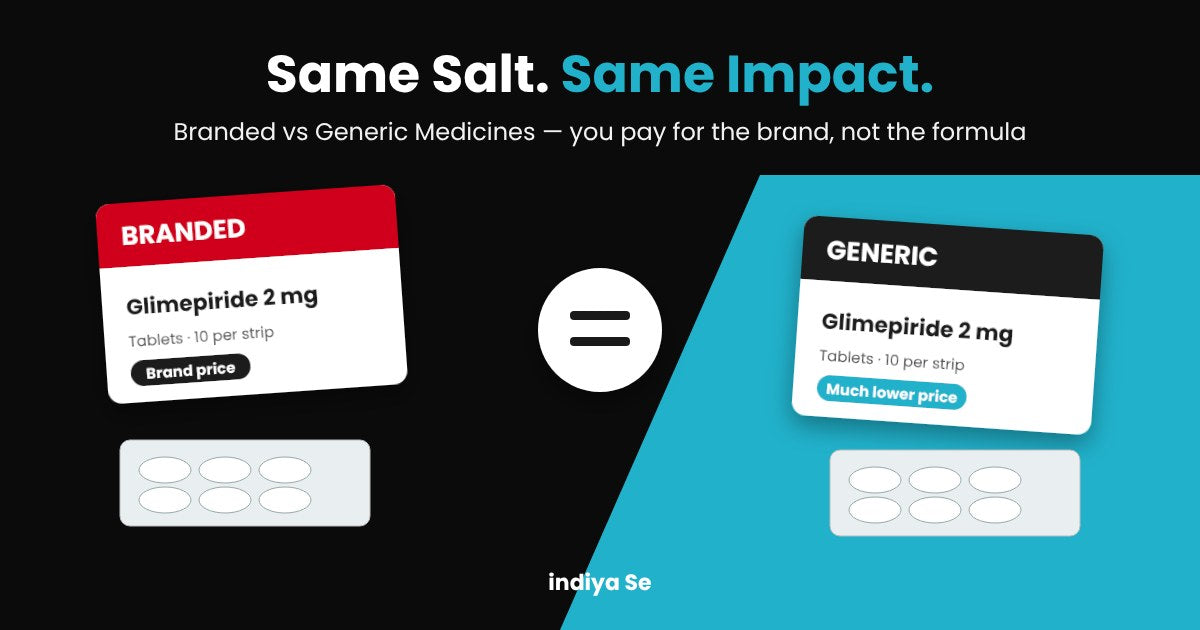
The primary difference between branded and generic medicines is often their branding, marketing and pricing.
Both can contain the same active pharmaceutical ingredient (API), which is responsible for producing the intended therapeutic effect.
For example, Glimepiride 2 mg is used to help manage blood glucose levels in people with type 2 diabetes. Different manufacturers may market medicines containing this same active ingredient under different brand names or as generics.
However, having the same salt alone does not automatically guarantee that two products are interchangeable. Their strength, dosage form, release characteristics, manufacturing quality and regulatory approval also matter.
What Makes a Generic Medicine Effective?
-
Active Pharmaceutical Ingredient (API): The API is the substance responsible for the medicine's therapeutic action.
-
Strength and Dosage: The medicine must meet the approved strength and dosage specifications.
-
Quality Standards: Manufacturers must comply with applicable pharmaceutical manufacturing and quality-control requirements.
-
Bioequivalence: Where required, bioequivalence studies help establish that a generic medicine performs comparably to the reference medicine in terms of drug absorption and availability in the body.
A properly approved generic medicine that meets the applicable quality and regulatory standards can be an effective and affordable treatment option.
2. Why Are Generic Medicines Cheaper Than Branded Medicines?
One of the most common questions consumers ask is: If generic medicines can provide comparable therapeutic benefits, why are they so affordable?
The answer often lies in the pharmaceutical business model.
When a pharmaceutical company develops a new medicine, it may invest heavily in research, clinical trials, regulatory approvals and marketing. Once relevant patents and exclusivity periods expire, other eligible manufacturers can produce approved versions of that medicine.
This creates competition and can significantly reduce prices.
| Expense Category | Branded Medicines | Generic Medicines |
|---|---|---|
| Research and Development | Original drug development can involve substantial investment | Usually does not require repeating the original discovery process |
| Marketing and Advertising | May involve extensive brand promotion | Often involves lower brand-promotion expenses |
| Brand Value | Established brand recognition | Usually limited brand-based pricing |
| Market Competition | Depends on brand positioning and competition | Multiple manufacturers can compete on price |
| Pricing | Can include significant brand and distribution costs | Often available at more affordable prices |
The important point: A lower price does not automatically mean lower quality. However, affordability should always go hand in hand with proper manufacturing standards, quality testing and regulatory compliance.
3. Are Generic Medicines Safe and Effective?
This is perhaps the most important question for consumers.
Generic medicines are not automatically inferior to branded medicines. Approved generic products must meet applicable regulatory requirements for identity, strength, quality and other relevant specifications.
Depending on the medicine and regulatory pathway, bioequivalence studies may also be required to demonstrate comparable drug absorption relative to a reference product.
In India, pharmaceutical regulation involves the Central Drugs Standard Control Organisation (CDSCO) and state drug regulatory authorities.
Manufacturers are also required to follow applicable Good Manufacturing Practices (GMP).
Understanding India's Pharmaceutical Quality Standards
Some important quality and regulatory measures include:
-
CDSCO Regulations: The Central Drugs Standard Control Organisation oversees important aspects of drug regulation in India.
-
Good Manufacturing Practices (GMP): These standards help ensure medicines are consistently manufactured and controlled according to appropriate quality requirements.
-
Schedule M: India's revised Schedule M establishes updated GMP requirements for pharmaceutical manufacturing facilities.
-
Quality Testing: Medicines are subject to applicable quality-control procedures and regulatory oversight.
It is important to remember that no medicine should be considered automatically safe simply because it is branded or generic. Product quality depends on the manufacturer, regulatory compliance, storage conditions and proper handling.
4. Common Myths About Generic Medicines
Let's separate common misconceptions from facts.
Myth 1: Cheap medicines are always low quality.
Fact: Price alone does not determine medicine quality. Approved generic medicines can provide comparable therapeutic performance when they meet the applicable standards.
Myth 2: Branded medicines always work better.
Fact: A brand name does not automatically make a medicine more effective. The active ingredient, formulation, quality and patient-specific factors matter.
Myth 3: Generic medicines are fake medicines.
Fact: Generic medicines are legitimate pharmaceutical products when manufactured and marketed with the required approvals. However, consumers should always purchase from reliable sources.
Myth 4: All medicines containing the same salt are interchangeable.
Fact: The same active ingredient does not always mean identical formulations. Dosage form, release mechanism, strength and other factors must be considered before switching.
5. How to Choose Quality Generic Medicines in India
Affordable healthcare should never mean compromising on safety.
Before purchasing a generic medicine, consider the following:
-
Check the medicine's name, strength and dosage form.
-
Verify the manufacturer's details and product information.
-
Purchase from a licensed and reliable pharmacy.
-
Check the manufacturing date, expiry date and packaging.
-
Follow your doctor's prescription and advice.
-
Consult your doctor or pharmacist before switching from a prescribed branded medicine to a generic alternative.
This is particularly important for medicines used to manage chronic conditions such as diabetes, blood pressure and heart-related conditions.
Never change your prescribed medication or dosage based only on a price comparison.
6. Making Affordable Healthcare More Accessible with indiyaSe
At indiyaSe, we believe that consumers deserve better access to affordable healthcare and wellness products.
We understand that rising healthcare expenses can place a significant burden on families. Access to reliable information and affordable alternatives can help consumers make more informed purchasing decisions.
Our approach focuses on:
-
Affordable Choices: Helping customers explore products at competitive prices.
-
Better Accessibility: Making wellness and healthcare-related products easier to discover.
-
Informed Decisions: Encouraging customers to understand product information before purchasing.
-
Value for Money: Bringing together affordability, convenience and product transparency.
We believe that healthcare decisions should be guided by medical advice, product quality and scientific evidence rather than price or brand perception alone.
Conclusion: Smart Healthcare Starts with the Right Information
The belief that "Sasta hai toh kharab hoga" should not prevent consumers from understanding the benefits of affordable generic medicines.
A higher price does not automatically guarantee better quality, just as a lower price does not automatically indicate poor quality.
The right approach is to evaluate medicines based on their approved composition, manufacturing standards, quality, regulatory compliance and suitability for individual patients.
Your health deserves informed decisions, reliable products and access to affordable choices.
Explore smarter shopping and affordable wellness options with indiyaSe.
Disclaimer: This article is intended for general educational purposes and is not a substitute for professional medical advice. Always consult a qualified healthcare professional before starting, stopping or changing any medication.
Blog 6. Indian Pharmaceutical Quality Standards: Understanding the Safety of Generic Medicines
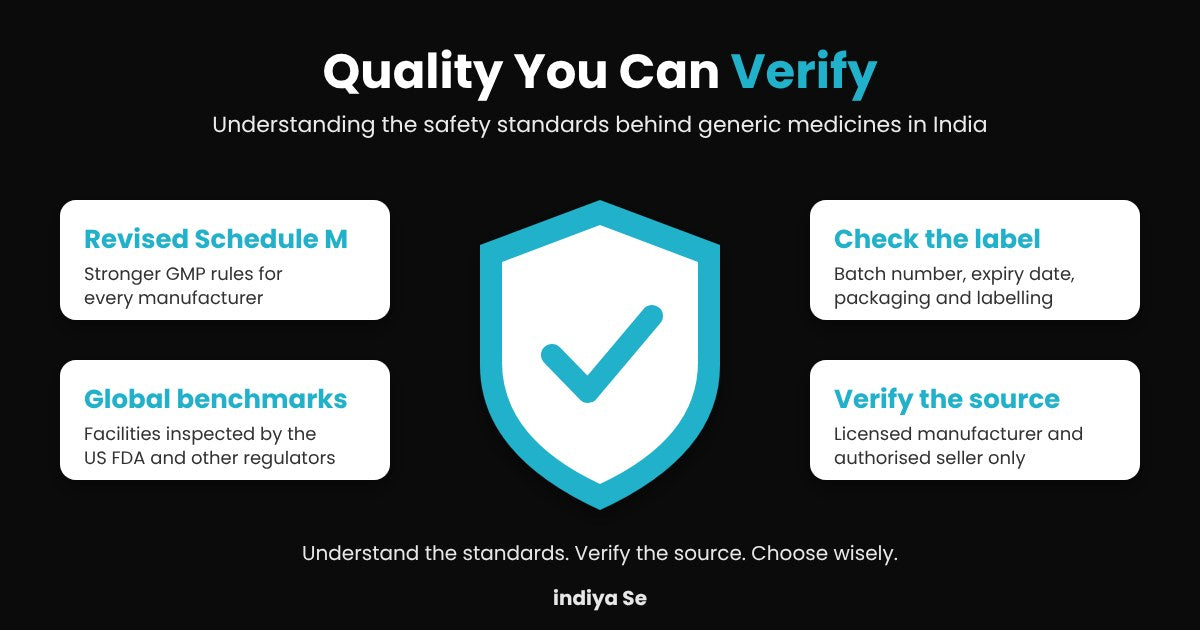
India is known as the "Pharmacy of the World", supplying affordable generic medicines to millions of people across the globe. However, occasional news reports about drug quality failures at individual manufacturing facilities can raise concerns among consumers.
When it comes to healthcare, medicine quality and patient safety should always be the top priorities. But should isolated manufacturing failures define the quality of an entire pharmaceutical industry?
Absolutely not.
Judging the entire Indian pharmaceutical sector based on a few non-compliant manufacturers would be like rejecting every vehicle because one workshop produced a faulty brake pad. Instead, consumers should understand the quality standards, regulatory frameworks, and manufacturing practices that help maintain medicine safety.
Let's explore the key factors that shape pharmaceutical quality in India.
1. Revised Schedule M: Strengthening Pharmaceutical Manufacturing Standards
The Indian pharmaceutical industry operates under regulatory requirements established by the Central Drugs Standard Control Organisation (CDSCO) and other relevant authorities.
The revised Schedule M of the Drugs Rules, 1945 strengthens Good Manufacturing Practices (GMP) requirements for pharmaceutical manufacturers.
These updated standards focus on:
-
Improved quality management systems.
-
Proper documentation and record maintenance.
-
Controlled manufacturing environments.
-
Equipment validation and calibration.
-
Quality control and quality assurance procedures.
-
Prevention of contamination and manufacturing errors.
-
Better monitoring of production processes.
These measures are designed to improve manufacturing consistency, strengthen regulatory compliance, and protect medicine quality.
2. Indian Pharmaceutical Companies Meet Global Quality Benchmarks
India has established a strong position in the global generic medicine market. Its pharmaceutical manufacturing facilities supply medicines to numerous international markets, including the United States and Europe.
Several Indian manufacturing facilities are inspected and approved by international regulatory authorities, including the US Food and Drug Administration (US FDA).
These facilities must comply with applicable regulatory requirements, quality management systems, and manufacturing standards.
This demonstrates the capabilities of India's pharmaceutical manufacturing ecosystem and its contribution to global healthcare.
However, quality certifications and regulatory approvals should always be verified for the specific manufacturer and product rather than assumed across the entire industry.
3. Why Generic Medicines Deserve Consumer Confidence
Generic medicines contain the same active pharmaceutical ingredients as their corresponding approved brand-name medicines and are required to meet applicable quality standards.
Depending on the regulatory approval and product category, generic medicines can offer several benefits:
-
Affordable Healthcare: Often available at lower prices than branded alternatives.
-
Established Quality Standards: Subject to applicable pharmaceutical quality and regulatory requirements.
-
Wider Accessibility: Help make essential treatments more affordable.
-
Cost Savings: Can reduce medicine expenses for individuals and families.
Consumers should always purchase medicines from reliable sources and follow the advice of qualified healthcare professionals.
4. Why Pharmaceutical Quality Verification Matters
Not every manufacturer follows the same quality practices. This makes regulatory compliance and manufacturer verification essential.
Before choosing a medicine, consumers should consider:
-
Whether the manufacturer has the required manufacturing licence.
-
Whether the product comes from a legitimate and authorised source.
-
Whether the medicine has proper packaging and labelling.
-
Whether the batch number and expiry date are clearly mentioned.
-
Whether the medicine is prescribed or recommended by a qualified healthcare professional.
An informed consumer makes better healthcare decisions.
The Indiya Se Promise: Affordable Healthcare with Transparency
At Indiya Se, we believe that affordable healthcare should go hand in hand with quality awareness and transparency.
Our aim is to make healthcare products more accessible by connecting customers with verified sellers and legitimate sources.
We encourage customers to make informed purchasing decisions, check product and manufacturer details, and consult qualified healthcare professionals whenever necessary.
A few isolated quality failures should encourage stronger monitoring and accountability, not create misconceptions about an entire pharmaceutical industry.
Understand the standards. Verify the source. Choose healthcare products wisely.
Explore affordable healthcare and wellness products at Indiya Se.
Blog 7. Bangladesh's Growing Pharmaceutical Industry: Opportunities for India's Pharma Sector and Indiya Se
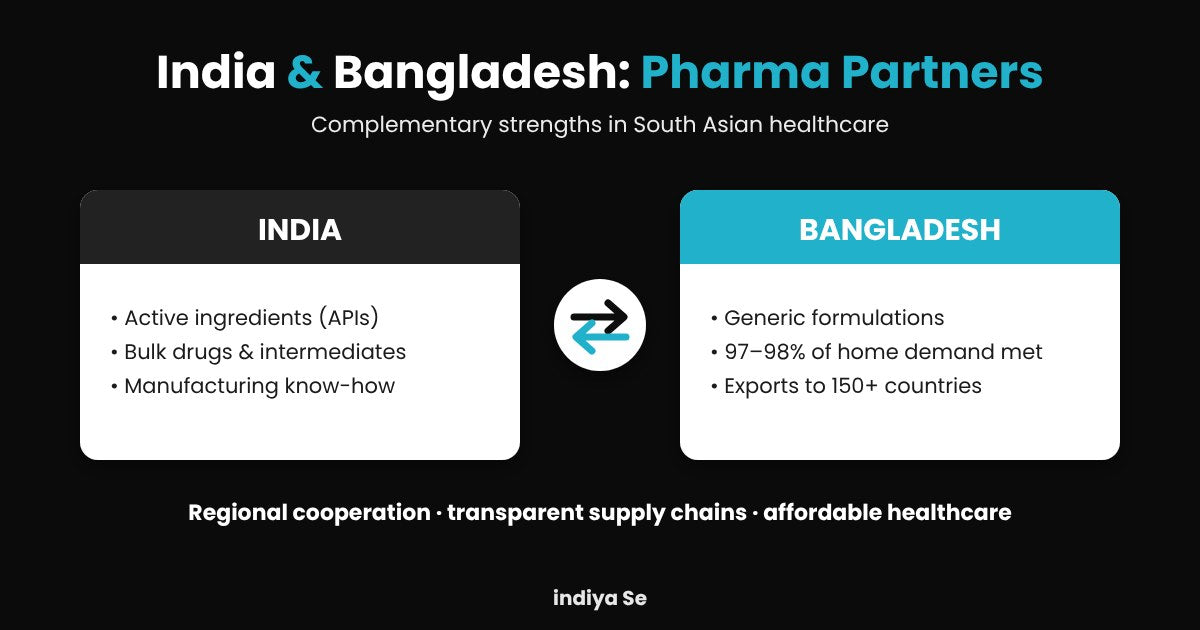
The pharmaceutical industry in South Asia is experiencing significant growth, with India and Bangladesh emerging as important contributors to global healthcare affordability. While India is widely recognized for its pharmaceutical manufacturing capabilities, Bangladesh has also developed a strong domestic pharmaceutical industry.
Over the years, Bangladesh has transformed from a medicine-importing country into a major pharmaceutical manufacturing hub. Its growing manufacturing capacity, skilled workforce, and expanding international presence make it an important market to watch.
For Indiya Se, an Indian digital marketplace focused on connecting businesses and customers, this development highlights potential opportunities in pharmaceutical supply chains, healthcare distribution, and cross-border wellness trade.
The Growth of Bangladesh's Pharmaceutical Industry
Bangladesh's pharmaceutical sector has made remarkable progress through domestic manufacturing, investment in production facilities, and supportive industrial policies.
Some important developments include:
-
Strong Domestic Production: Local pharmaceutical manufacturers reportedly meet approximately 97% to 98% of Bangladesh's domestic medicine demand.
-
Expanding Market: The pharmaceutical market has grown into a multi-billion-dollar industry, reflecting increasing demand for affordable healthcare products.
-
International Exports: Bangladeshi pharmaceutical companies export medicines to more than 150 countries, including several highly regulated international markets.
-
Advanced Generic Manufacturing: Local manufacturers produce various generic medicines and specialized formulations, including oncology products, insulin, and other essential treatments.
This growth demonstrates how strategic investment, manufacturing capabilities, and domestic industry development can strengthen a country's healthcare ecosystem.
India's Role in Bangladesh's Pharmaceutical Supply Chain
Although Bangladesh has developed substantial pharmaceutical manufacturing capabilities, it continues to depend on international suppliers for several pharmaceutical raw materials.
One important category is Active Pharmaceutical Ingredients (APIs), which are the essential substances responsible for the therapeutic effect of medicines.
India has a well-established pharmaceutical manufacturing ecosystem, including API production, bulk drugs, pharmaceutical intermediates, and formulations.
This creates opportunities for greater cooperation between Indian suppliers and Bangladeshi pharmaceutical manufacturers.
Understanding the India-Bangladesh Pharmaceutical Connection
The two countries have complementary strengths:
-
India: Pharmaceutical APIs, bulk drugs, intermediates, manufacturing infrastructure, and technical expertise.
-
Bangladesh: Pharmaceutical formulation, generic medicine production, domestic distribution, and international exports.
Stronger cooperation between these industries could support supply-chain efficiency, manufacturing development, and affordable healthcare solutions.
Three Potential Opportunities for Indiya Se
As digital commerce continues to transform traditional business operations, platforms such as Indiya Se can explore opportunities in the growing South Asian healthcare and wellness ecosystem.
1. B2B Pharmaceutical Supply Chain Opportunities
A more connected pharmaceutical supply chain can help manufacturers identify suppliers, compare sourcing options, and improve procurement transparency.
Indiya Se sees potential in exploring digital B2B connections between Indian pharmaceutical suppliers and international business buyers.
Such opportunities may include:
-
Connecting verified pharmaceutical manufacturers and suppliers.
-
Improving product and supplier information accessibility.
-
Supporting transparent business-to-business sourcing.
-
Exploring partnerships for pharmaceutical raw materials and healthcare products.
All pharmaceutical transactions would need to comply with applicable manufacturing, import, export, licensing, and quality regulations.
2. Exploring Bangladesh's Generic Medicine Manufacturing Sector
Bangladesh has developed considerable expertise in producing affordable generic medicines across several therapeutic categories.
Its manufacturing ecosystem offers an opportunity to understand how different countries are improving access to affordable healthcare through local production.
For Indiya Se, exploring international pharmaceutical partnerships could provide valuable insights into:
-
Generic medicine manufacturing.
-
Pharmaceutical quality standards.
-
International healthcare distribution.
-
Regulated pharmaceutical sourcing.
-
Affordable healthcare innovation.
Any future marketplace participation in pharmaceutical products would depend on the necessary regulatory approvals in each destination market.
3. Cross-Border Wellness and Traditional Healthcare Products
Beyond conventional pharmaceutical manufacturing, Bangladesh and India have growing traditional wellness sectors.
Both countries have established markets for products associated with Ayurveda, herbal wellness, Unani traditions, and other traditional healthcare practices.
This creates potential opportunities for businesses to explore international demand for authentic wellness products.
Indiya Se aims to support a more connected digital commerce ecosystem where customers and businesses can discover products across categories.
Cross-border sales would be subject to applicable product safety, labelling, import, export, and regulatory requirements.
The Future of Pharmaceutical Cooperation Between India and Bangladesh
The relationship between India's pharmaceutical raw-material capabilities and Bangladesh's formulation industry highlights the importance of regional cooperation.
Both countries have developed valuable strengths that can contribute to a more efficient South Asian healthcare ecosystem.
Greater collaboration could help encourage:
-
More efficient pharmaceutical sourcing.
-
Stronger regional manufacturing partnerships.
-
Better supply-chain transparency.
-
Innovation in generic medicine production.
-
Wider access to affordable healthcare products.
Digital platforms can also contribute by improving business connectivity, product discovery, and access to verified suppliers.
Indiya Se: Exploring New Opportunities in South Asian Digital Commerce
At Indiya Se, we believe that the future of commerce lies in better connectivity, transparency, and accessibility.
Our vision is to build a digital marketplace that connects customers and businesses across product categories while exploring opportunities for responsible expansion into new markets.
The growing pharmaceutical and wellness industries in Bangladesh represent an interesting development in South Asian commerce.
As we explore future opportunities, our focus remains on building trusted business connections, improving product accessibility, and supporting a more connected digital marketplace.
Follow Indiya Se to stay updated on our business developments, marketplace expansion, and the evolving world of digital commerce.
Indiya Se – Connecting Businesses, Products, and Opportunities.